A Letter From ‘Almost Your Countrymen’
A tribute to Paul Mirat, who treated refugees like human beings

I wouldn’t be here if it weren’t for Paul Mirat – he saved my father’s life. That’s not something you can say very often.
I never knew about the existence of Paul Mirat until very recently, so I never had a chance to thank him properly. This is something I describe in my memoir, The Silk Factory: Finding Threads of My Family’s True Holocaust Story (which I’d be grateful if you purchased).
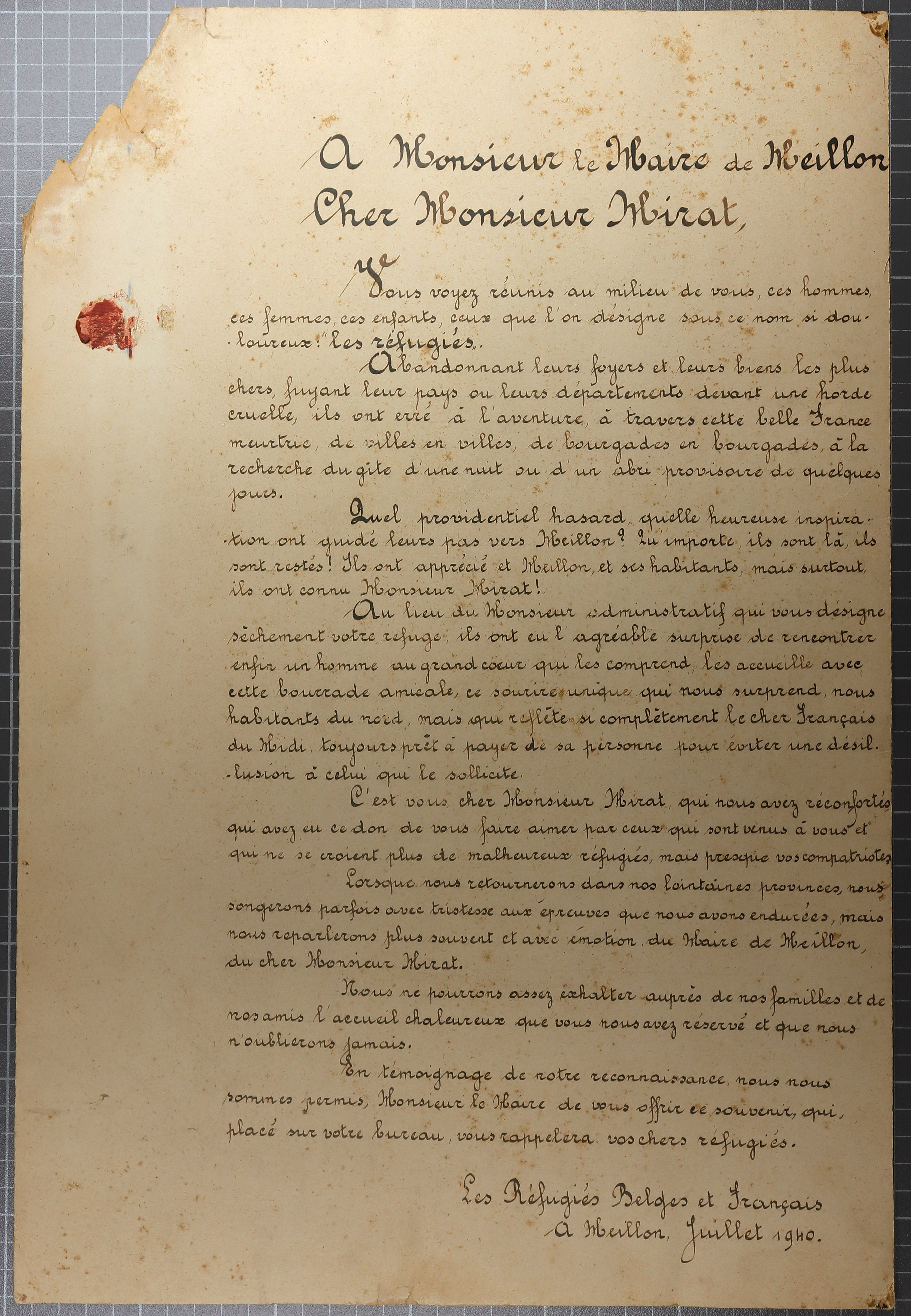
Fortunately, my father’s wasn’t the only life he saved, and a few of those people had the good idea of thanking him publicly, in a letter left at his desk along with a small present – a bronze sculpture they acquired who-knows-how.
This letter (see my translation below) was written by a group of mostly Jewish refugees from Belgium and northern France, who had been arrested and sent by Nazi forces to internment camps throughout France. The next step in their journey would have been one of the death camps, had they not been able to catch their breath and undertake the arduous task of finding exit visas, transit visas, or other bureaucratic means of escape.
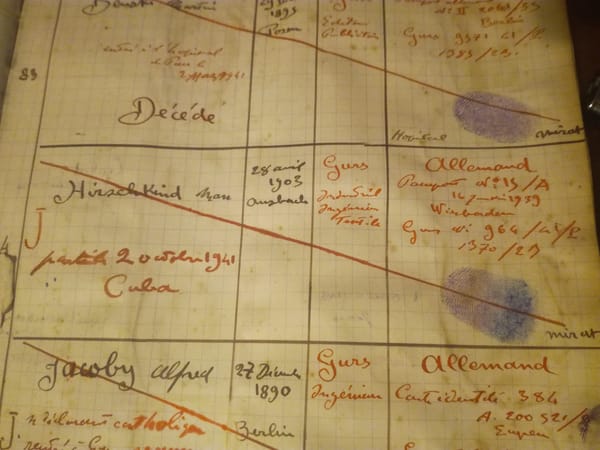
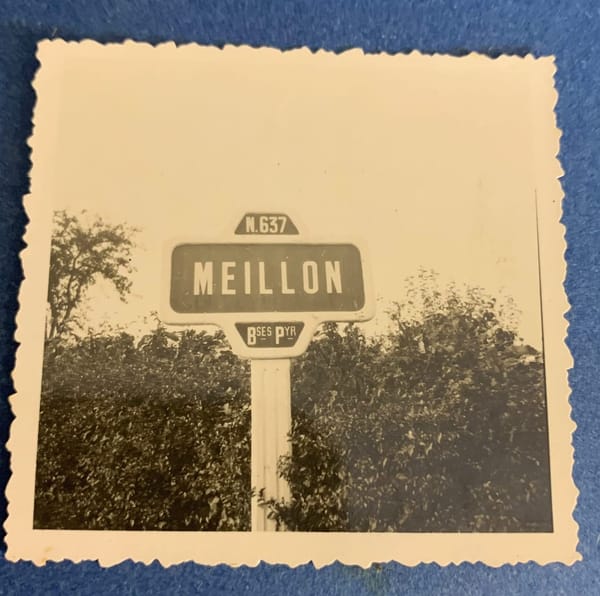
Of those fortunate enough to be sent to the camps in Saint Cyprien and Gurs, in southwest France, some 2,000 were rescued from those camps by Paul Mirat, who as mayor of the small town of Meillon (600 inhabitants), organized their release among the residents of Meillon, including his own home. Some of the refugees lived in the stables Mirat formerly used to raise purebred horses — and even a metal bunk in a stable was preferable to the typhus and dysentery-wracked camps.
But let me restate the math – a town of 600 people took in some 2,000 refugees.
Paul Mirat and Paul Mirat
I’ve written about this at greater length in my memoir, but I didn’t reproduce this letter. This newsletter, then, is an opportunity for me to thank the elder Paul Mirat in some small way, and also to thank his grandson Paul Mirat, who is as generous in spirit as any person I have ever met, who welcomed me into his home, cooked me lunch, and showed me documents concerning that period that I will share in the next edition of this newsletter.
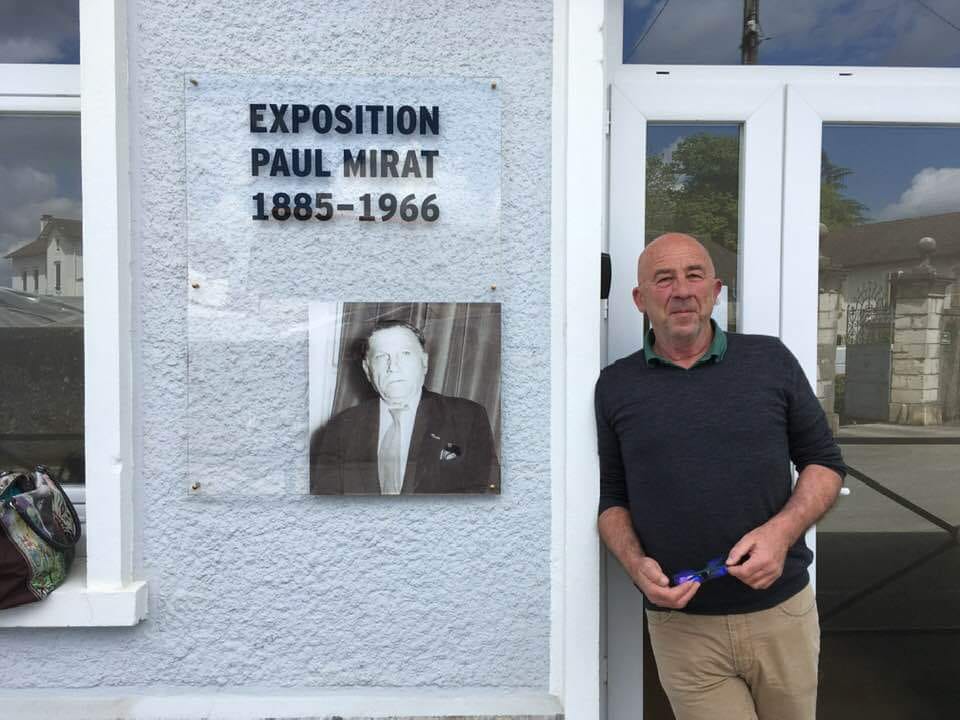
When you go to Meillon, you will find the Espace Culturelle Paul Mirat – the Paul Mirat Cultural Center. It was inaugurated in 2019 thanks to the tireless efforts of his grandson.
There, you will see an enlargement of their letter, which thanks the former mayor for having made them feel so welcome as to feel they were “almost your countrymen.”
Here is a translation of that letter:
You see among you these men, these women, these children, those identified by that very painful label – the refugees.
Having abandoned their homes and their most treasured belongings, fleeing their country or regions before a cruel horde, they have wandered at random across this beautiful, scarred France, from city to city, from town to town, in search of a bed for a night or for temporary shelter for a few days.
What providential chance, what fortuitous initiative guided their footsteps towards Meillon? No matter! They are here, and here they stayed. They are grateful for both Meillon and its residents, but they have a special gratitude for Mr. Mirat!
Rather than a bureaucrat drily assigning you a place of refuge, they had the pleasant surprise of finally encountering a man of huge heart who understands them, welcomes them with a friendly slap on the back, a singular smile that takes us northern folk slightly aback, but which perfectly represents the southern Frenchman who is always ready to give of himself so that another will not go away empty-handed.
It’s you, dear Mr. Mirat, who has comforted us, you who have had this gift of making yourself beloved by those who came to you, and who no longer think of themselves as unfortunate refugees , but rather, almost your countrymen.
Once we have regained our faraway homes, we will think back sadly upon some of the ordeals we have endured, but we will more often speak highly of the mayor of Meillon, that dear Mr. Mirat.
We will never be able to exalt highly enough to our friends and family the warm welcome you have given us, and which we will never forget.
As a token of our gratitude, we have left on your desk a memento that we hope will remind you of your dear refugees.
The Belgian and French refugees – in Meillon, July 1940